ESG Management
ESG management requires a well-developed ESG management strategy and ESG disclosure systems.
Corporate values can be enhanced by ESG management that sets corporate strategic tasks in the ESG perspectives and discloses the relevant activities.
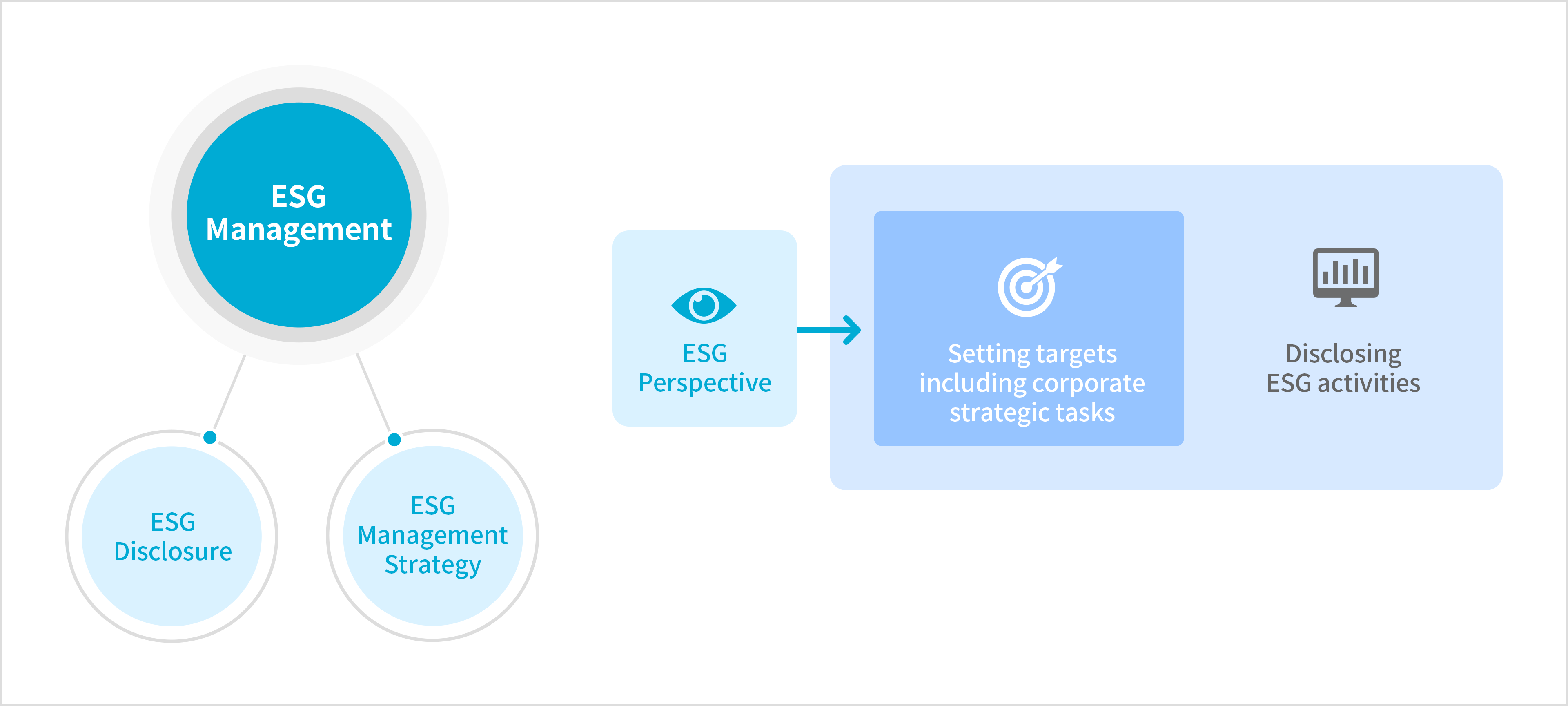
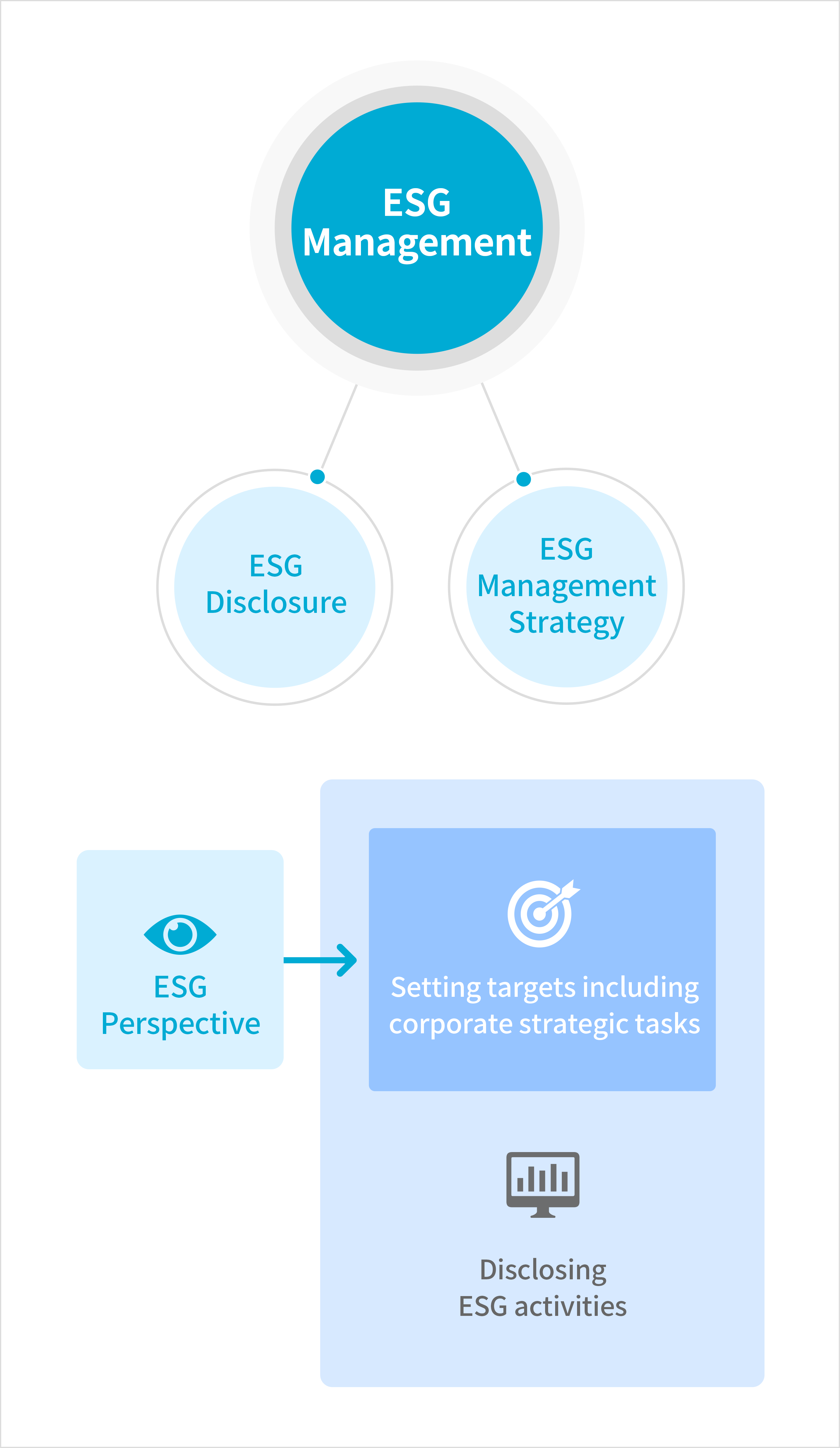
ESG Management : ESG Management, ESG Disclosure, ESG Management Strategy, ESG Perspective : Setting targets including corporate strategic tasks, Disclosing ESG activities ESG Management : ESG Management, ESG Disclosure, ESG Management Strategy, ESG Perspective : Setting targets including corporate strategic tasks, Disclosing ESG activities ESG Management : ESG Management, ESG Disclosure, ESG Management Strategy, ESG Perspective : Setting targets including corporate strategic tasks, Disclosing ESG activities
ESG Management Strategy
ESG management is often perceived as merely responding to ESG assessments to obtain favorable ratings. However, as seen in past cases such as Volkswagen’s Clean Diesel scandal, an approach to ESG driven primarily by ratings and marketing can be as risky as accounting fraud. Effective ESG management requires companies to integrate ESG considerations into their overall business by reshaping their vision, goals, and strategies accordingly.
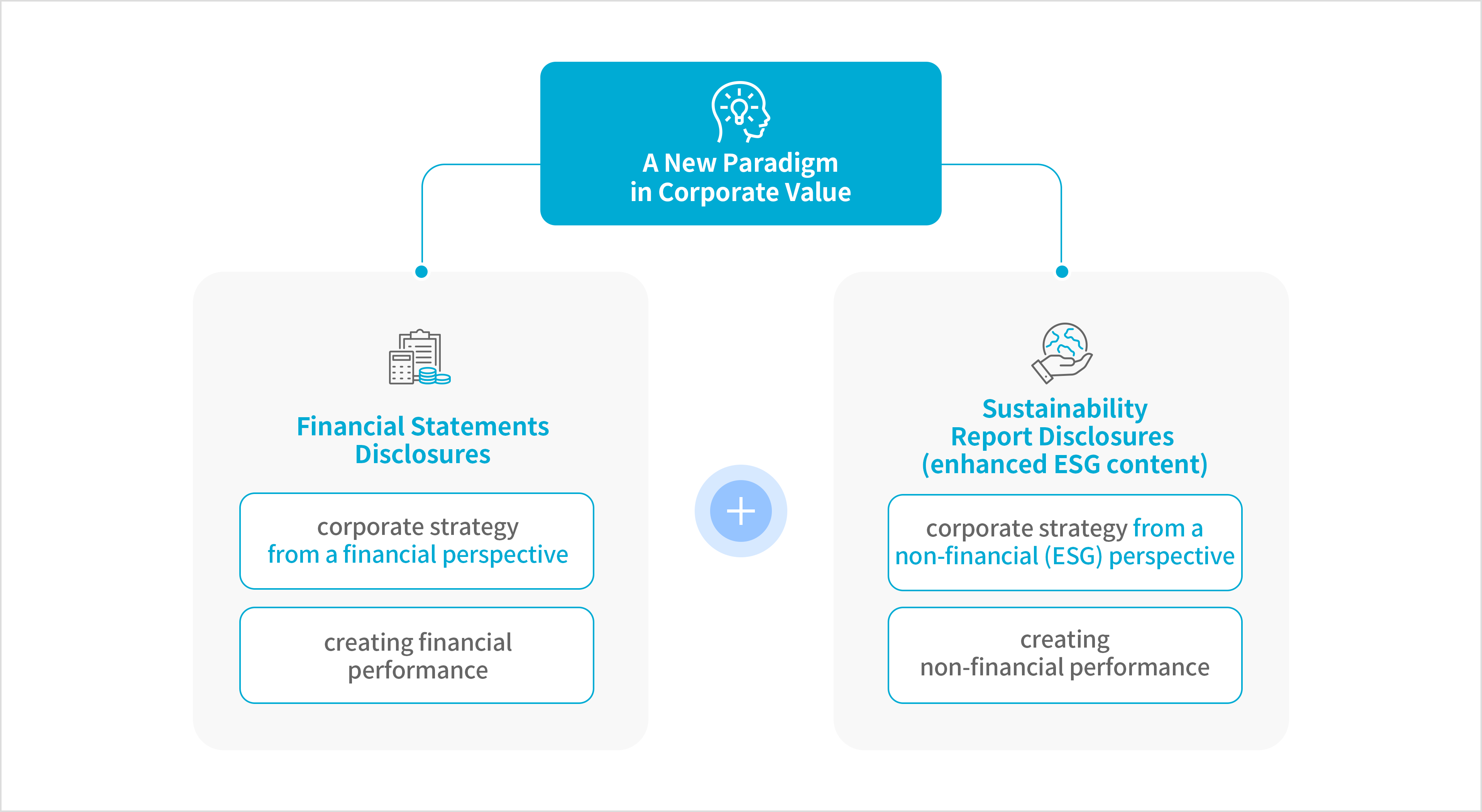
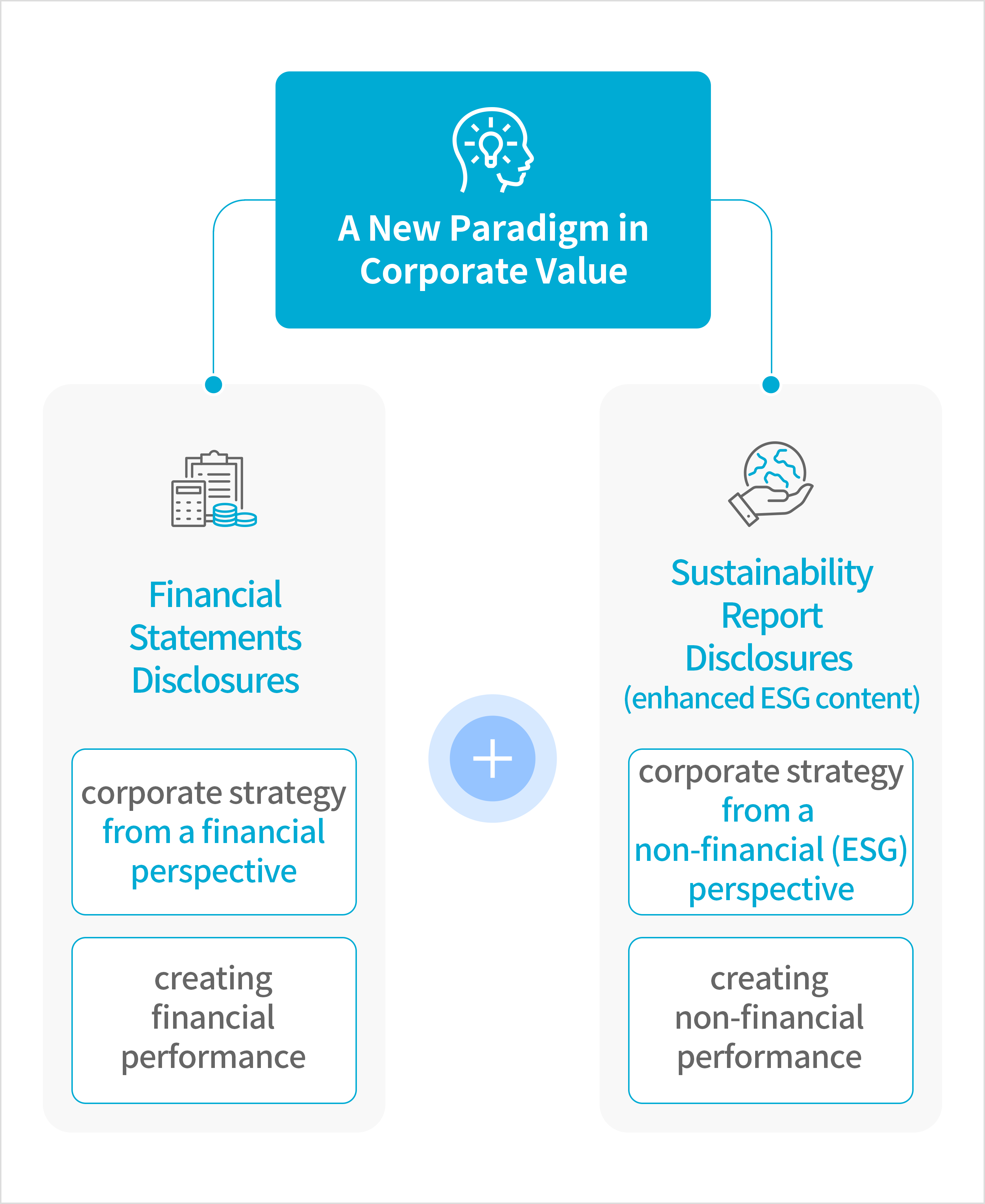
A New Paradigm in Corporate Value. Financial Statements Disclosures(corporate strategy from a financial perspective, creating financial performance) + Sustainability Report Disclosures (enhanced ESG content)(corporate strategy from a non-financial (ESG) perspective, creating non-financial performance) A New Paradigm in Corporate Value. Financial Statements Disclosures(corporate strategy from a financial perspective, creating financial performance) + Sustainability Report Disclosures (enhanced ESG content)(corporate strategy from a non-financial (ESG) perspective, creating non-financial performance) A New Paradigm in Corporate Value. Financial Statements Disclosures(corporate strategy from a financial perspective, creating financial performance) + Sustainability Report Disclosures (enhanced ESG content)(corporate strategy from a non-financial (ESG) perspective, creating non-financial performance)
Source: Samjong KPMG
ESG management begins not only with responding to ESG-related regulations and reviewing ESG impacts in investment and financing activities, but also with considering the social impacts of companies’ products and services across the entire lifecycle—from production supply chains to end-of-life disposal.
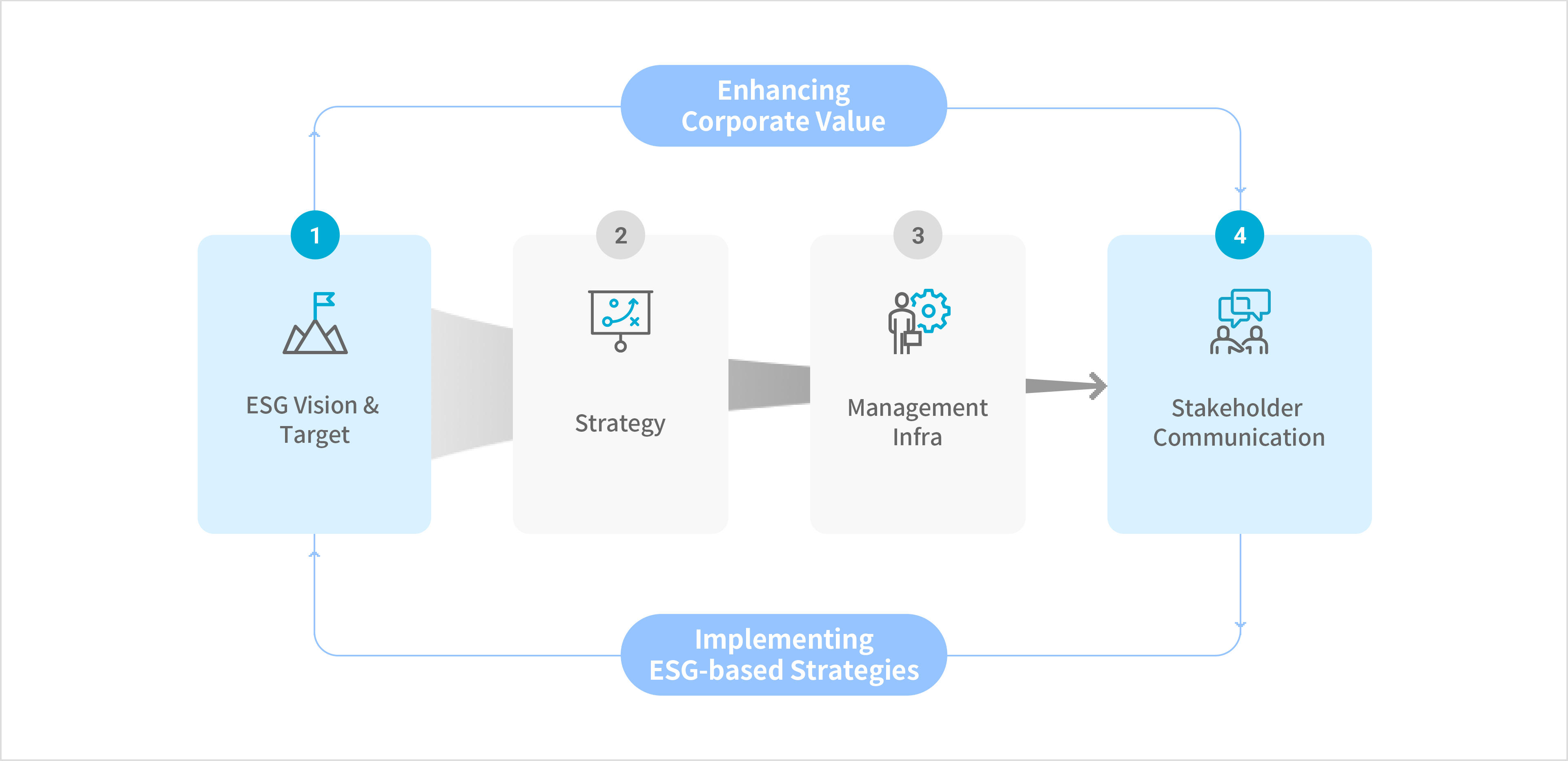
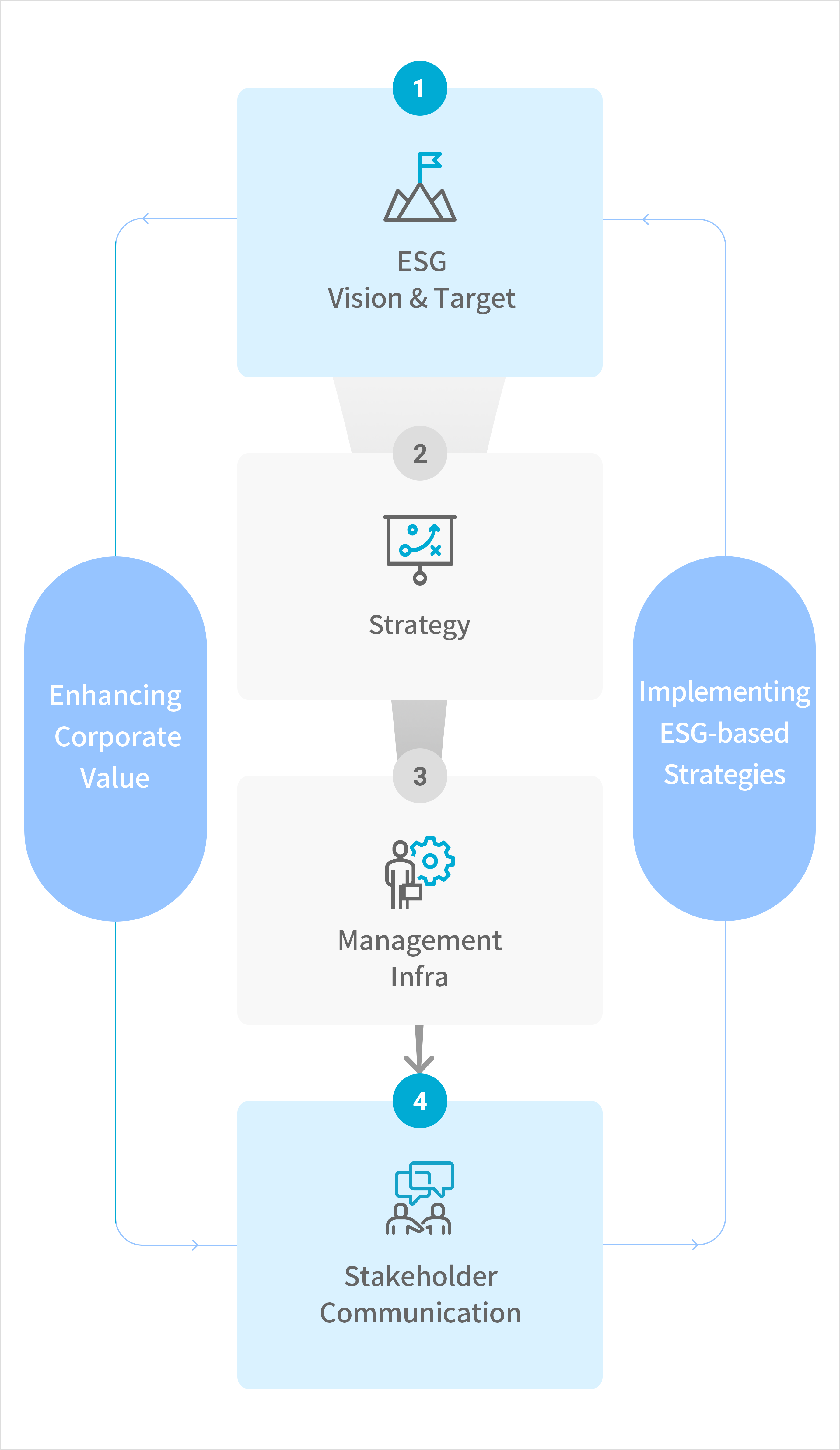
Enhancing Corporate Value. 1. ESG Vision & Target, 2. Strategy, 3. Management Infra, 4. Stakeholder Communication. Implementing ESG-based Strategies Enhancing Corporate Value. 1. ESG Vision & Target, 2. Strategy, 3. Management Infra, 4. Stakeholder Communication. Implementing ESG-based Strategies Enhancing Corporate Value. 1. ESG Vision & Target, 2. Strategy, 3. Management Infra, 4. Stakeholder Communication. Implementing ESG-based Strategies
Source: Samjong KPMG
Steps in ESG Management Planning
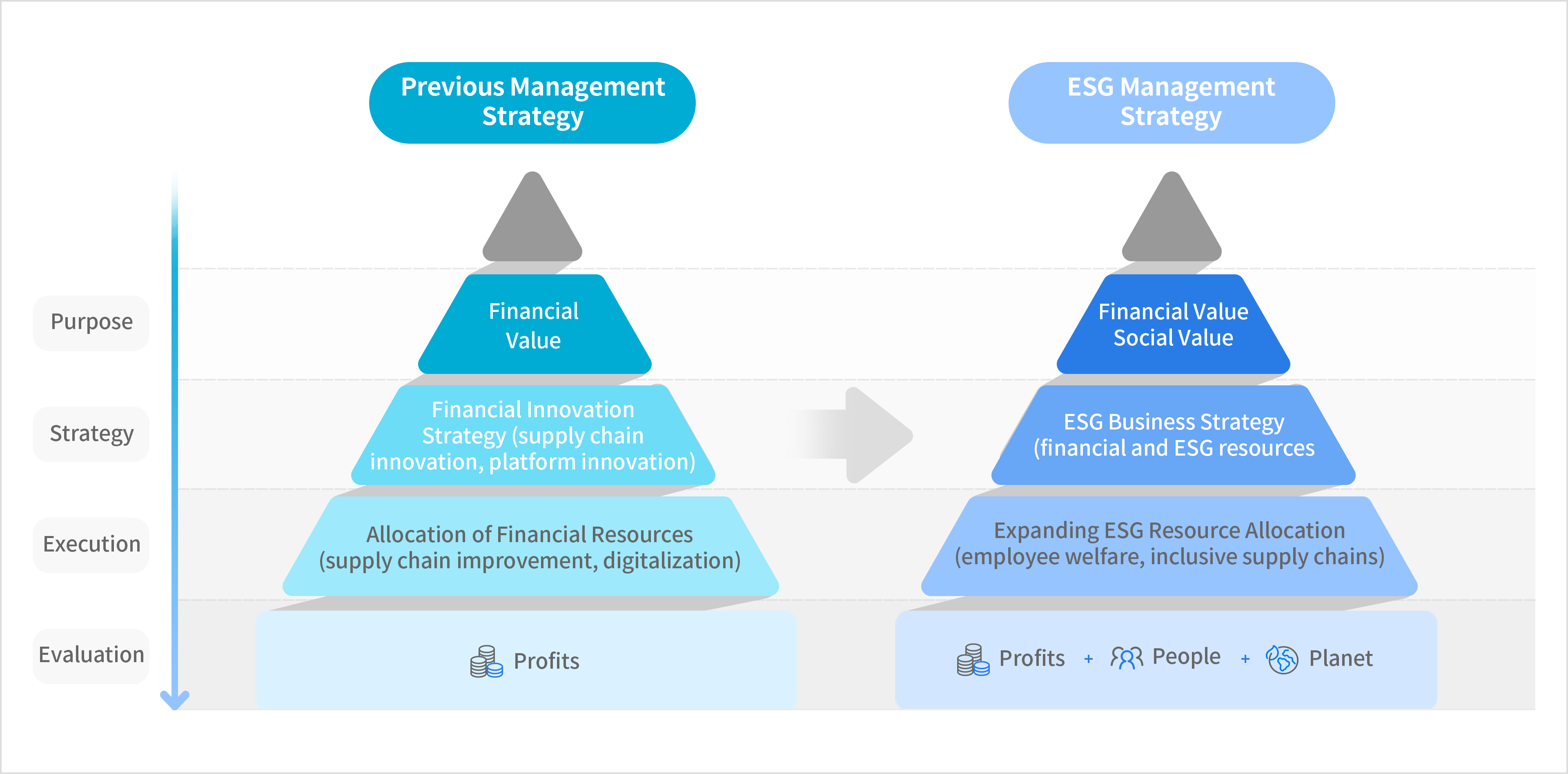
Previous Management Strategy. Purpose : Financial Value, Strategy : Financial Innovation Strategy(supply chain innovation, platform innovation), Execution : Allocation of Financial Resources(supply chain improvement, digitalization), Evaluation : Profits
							ESG Management Strategy. Purpose : Financial Value Social Value, Strategy : ESG Business Strategy (financial and ESG resources), Execution : Expanding ESG Resource Allocation (employee welfare, inclusive supply chains), Evaluation : Profits+People+Planet Previous Management Strategy. Purpose : Financial Value, Strategy : Financial Innovation Strategy(supply chain innovation, platform innovation), Execution : Allocation of Financial Resources(supply chain improvement, digitalization), Evaluation : Profits
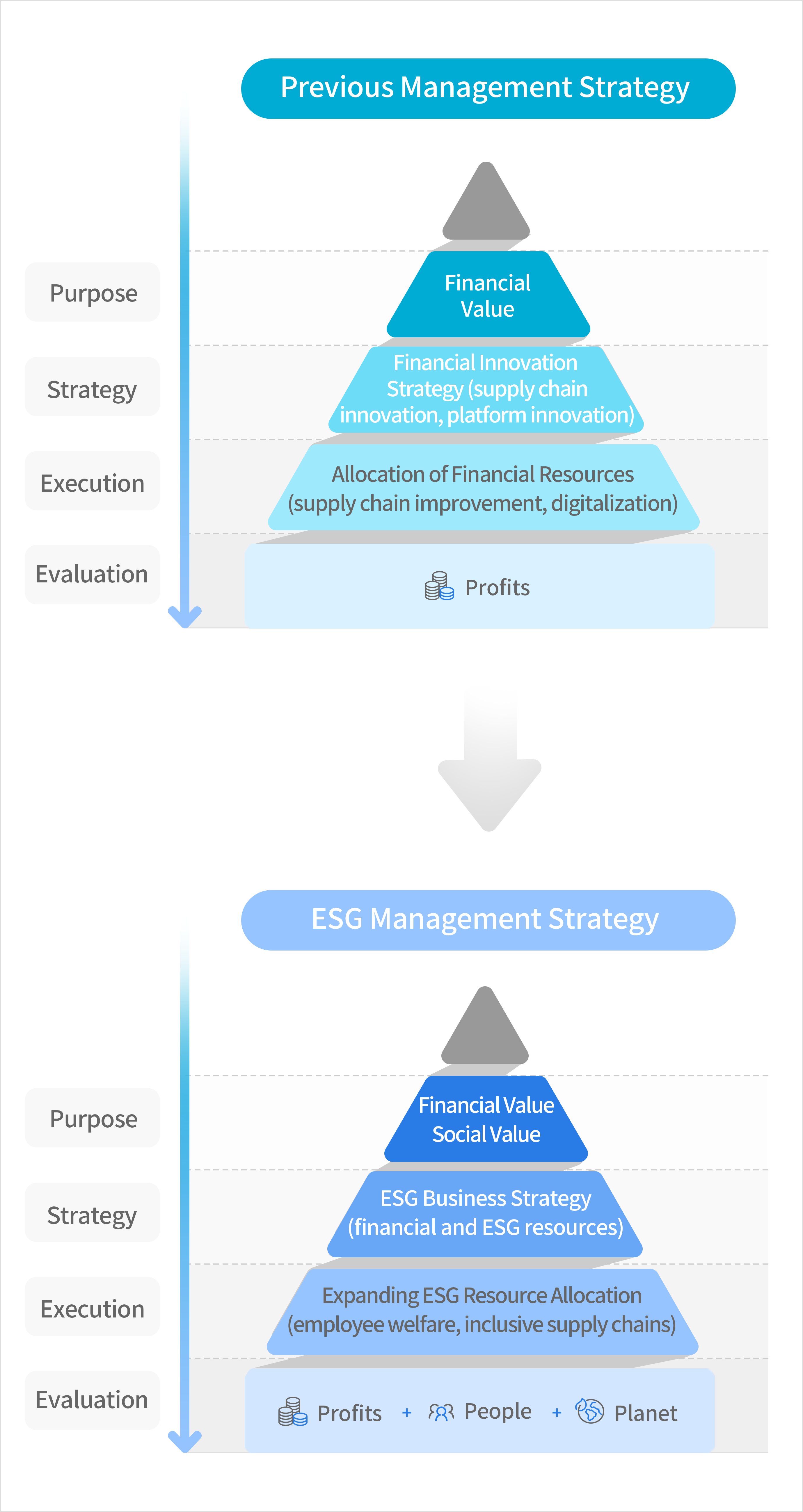
							ESG Management Strategy. Purpose : Financial Value Social Value, Strategy : ESG Business Strategy (financial and ESG resources), Execution : Expanding ESG Resource Allocation (employee welfare, inclusive supply chains), Evaluation : Profits+People+Planet Previous Management Strategy. Purpose : Financial Value, Strategy : Financial Innovation Strategy(supply chain innovation, platform innovation), Execution : Allocation of Financial Resources(supply chain improvement, digitalization), Evaluation : Profits
							ESG Management Strategy. Purpose : Financial Value Social Value, Strategy : ESG Business Strategy (financial and ESG resources), Execution : Expanding ESG Resource Allocation (employee welfare, inclusive supply chains), Evaluation : Profits+People+Planet
Source: Korea Capital Market Institute (KCMI)
Enhancing Corporate Value through ESG Management
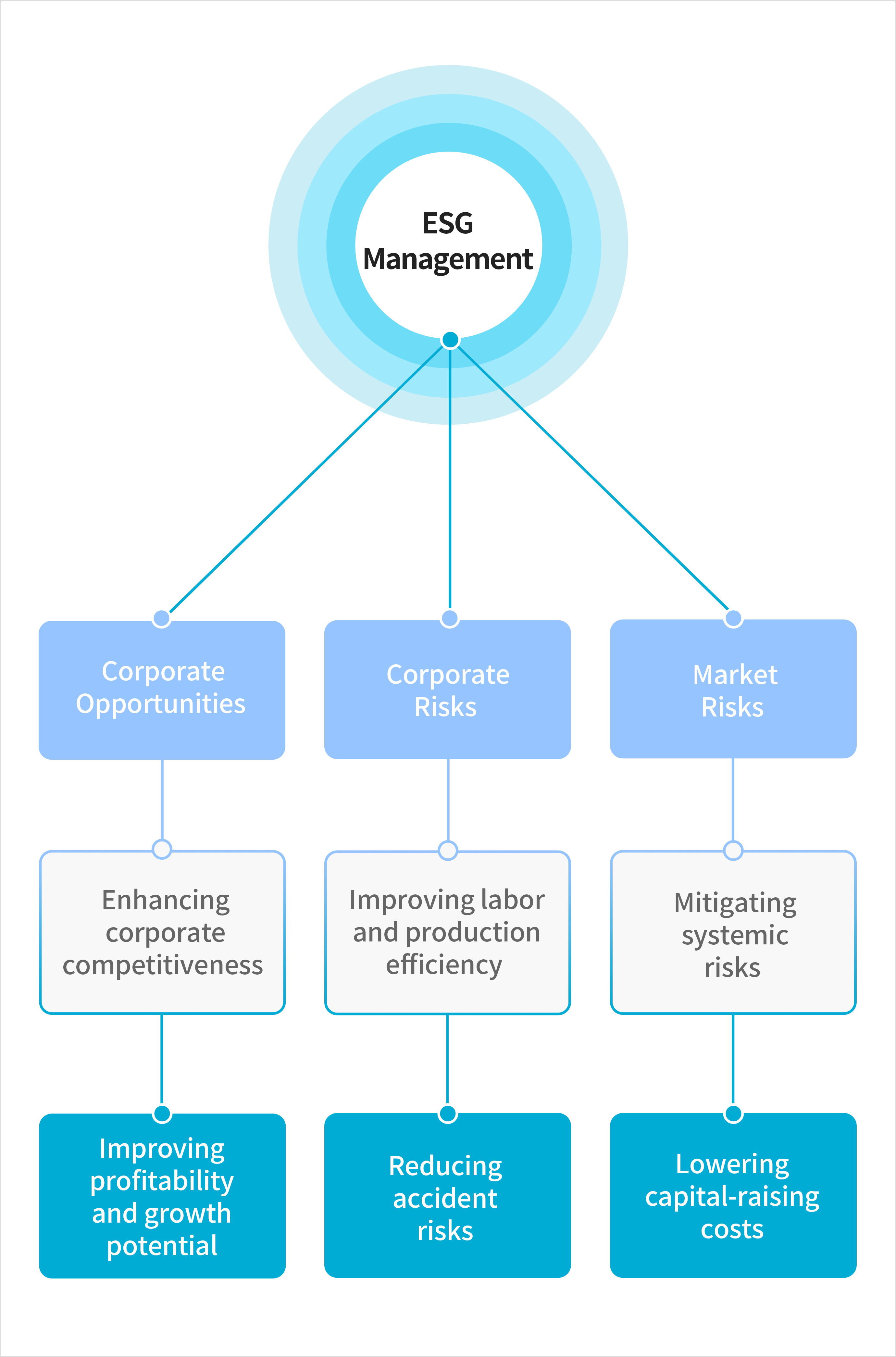
ESG management represents a shift away from traditional corporate practices that focus solely on maximizing financial profits. As the key driver of ESG management, companies can enhance their corporate value by increasing revenue, managing risks, and reducing financial costs.
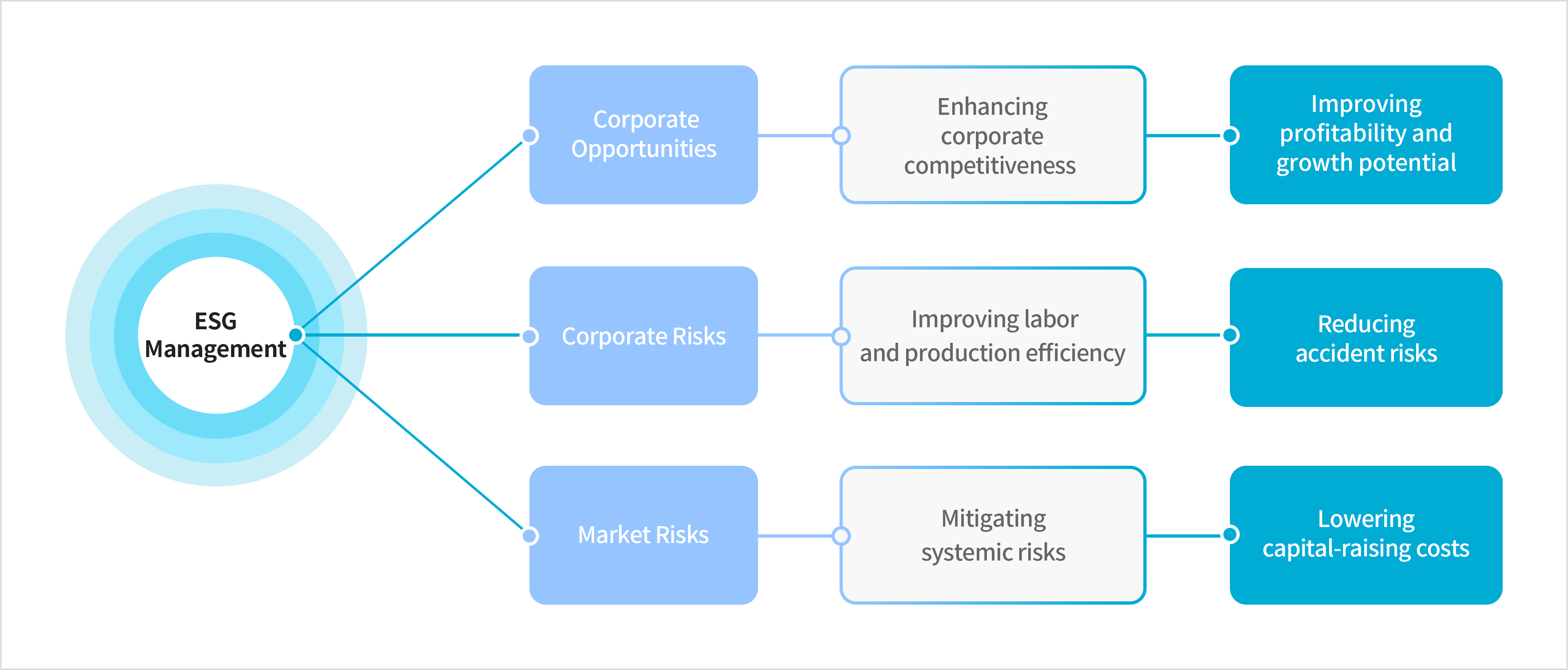
ESG Management. Corporate Opportunities(Enhancing corporate competitiveness, Improving profitability and growth potential), Corporate Risks(Improving labor and production efficiency, Reducing accident risks), Market Risks(Mitigating systemic risks, Lowering capital-raising costs) ESG Management. Corporate Opportunities(Enhancing corporate competitiveness, Improving profitability and growth potential), Corporate Risks(Improving labor and production efficiency, Reducing accident risks), Market Risks(Mitigating systemic risks, Lowering capital-raising costs) ESG Management. Corporate Opportunities(Enhancing corporate competitiveness, Improving profitability and growth potential), Corporate Risks(Improving labor and production efficiency, Reducing accident risks), Market Risks(Mitigating systemic risks, Lowering capital-raising costs)
Source: Korea Capital Market Institute (KCMI)