ESG Investment
1
Financial markets continue to expand their use of ESG considerations.
Global ESG Investment
Investors are actively incorporating ESG considerations into their investment decisions.
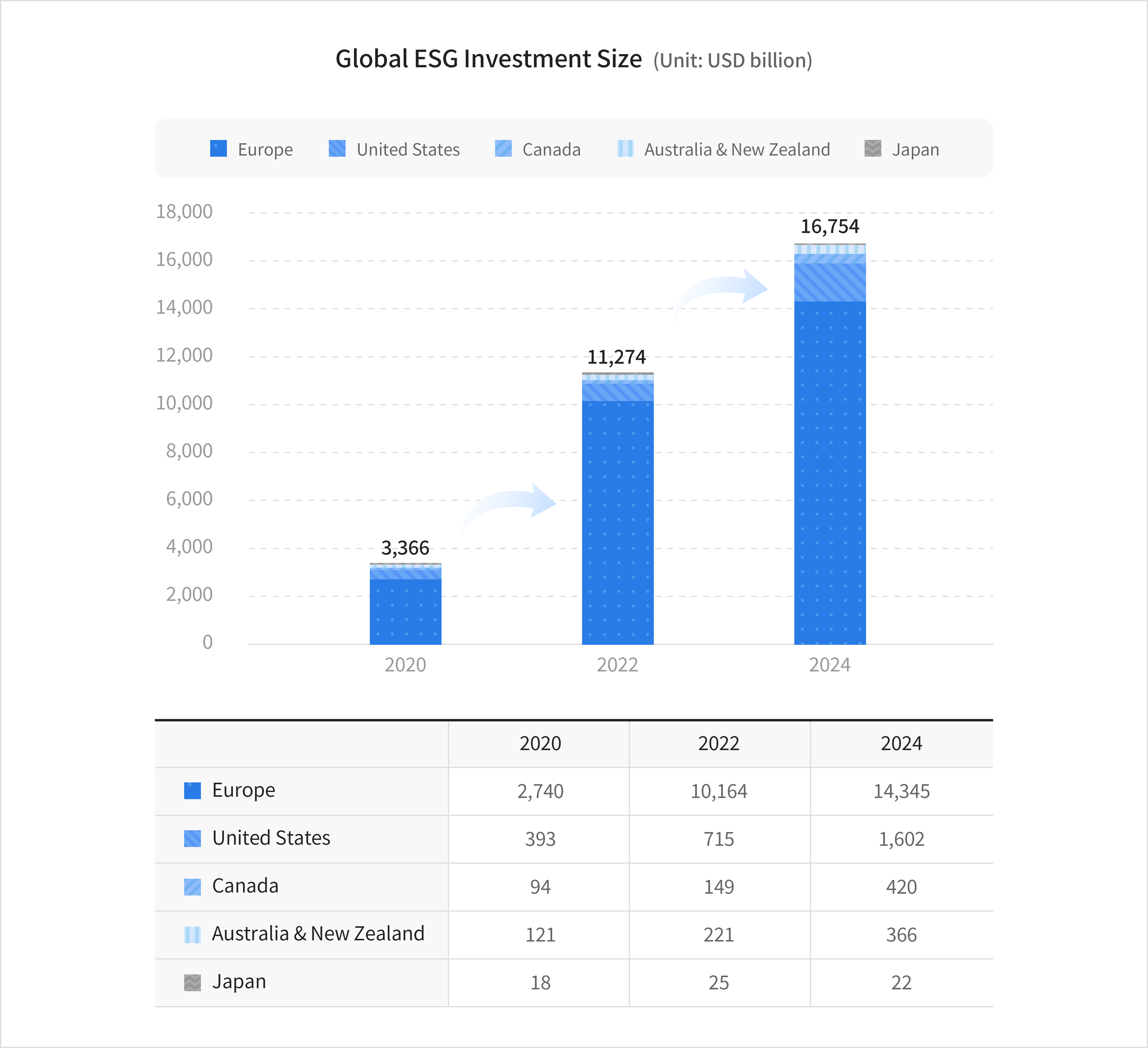
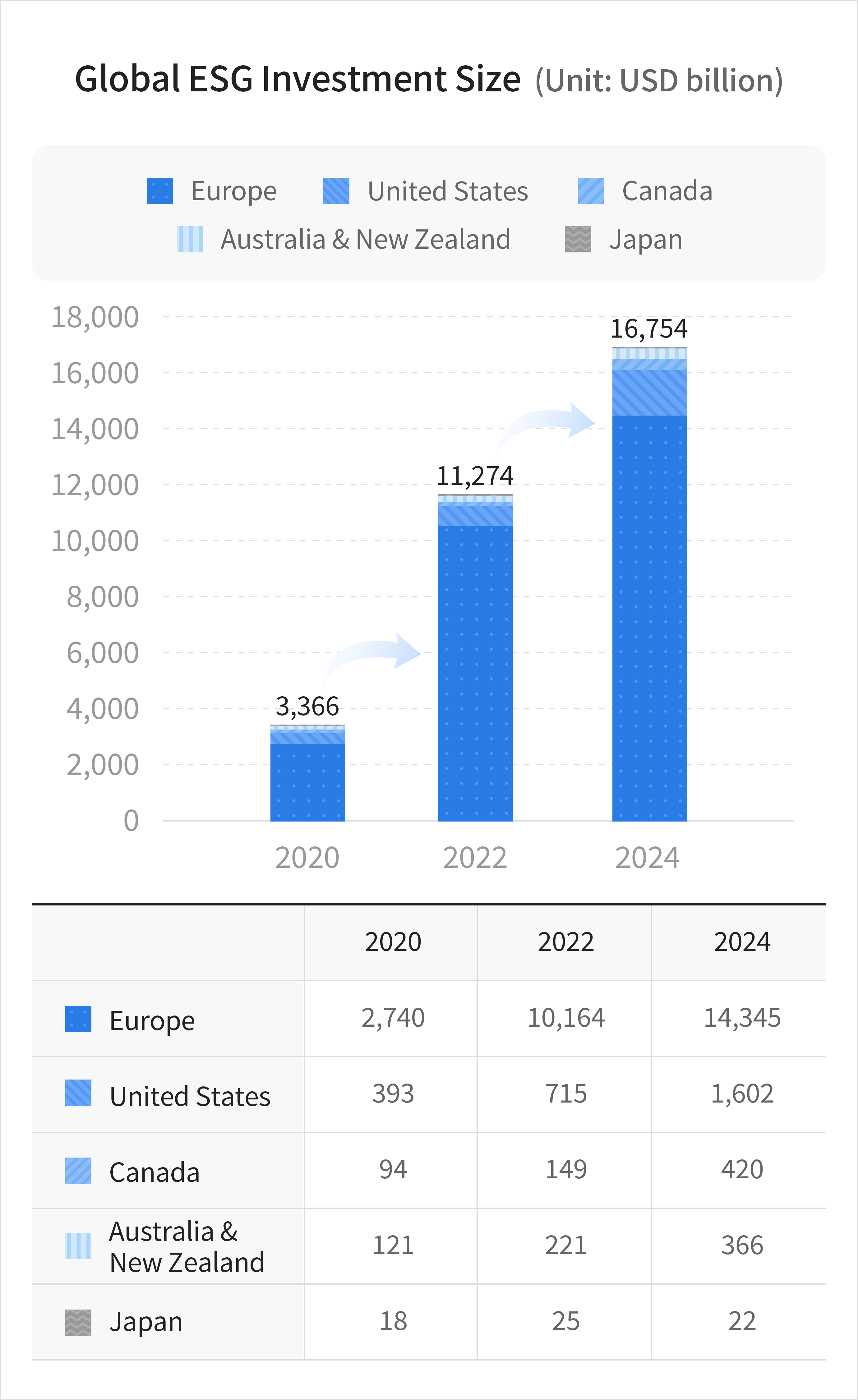
Global ESG Investment Size (Unit: USD billion)
							2020 : 3,366, 2022 : 11,274, 2024 : 16,754
							2020 : Japan 18, Australia&New Zealand 121, Canada 94, United States 393, Europe 2,740
							2022 : Japan 25, Australia&New Zealand 221, Canada 149, United States 715, Europe 10,164
							2024 : Japan 22, Australia&New Zealand 366, Canada 420, United States 1,602, Europe 14,345 Global ESG Investment Size (Unit: USD billion)
							2020 : 3,366, 2022 : 11,274, 2024 : 16,754
							2020 : Japan 18, Australia&New Zealand 121, Canada 94, United States 393, Europe 2,740
							2022 : Japan 25, Australia&New Zealand 221, Canada 149, United States 715, Europe 10,164
							2024 : Japan 22, Australia&New Zealand 366, Canada 420, United States 1,602, Europe 14,345 Global ESG Investment Size (Unit: USD billion)
							2020 : 3,366, 2022 : 11,274, 2024 : 16,754
							2020 : Japan 18, Australia&New Zealand 121, Canada 94, United States 393, Europe 2,740
							2022 : Japan 25, Australia&New Zealand 221, Canada 149, United States 715, Europe 10,164
							2024 : Japan 22, Australia&New Zealand 366, Canada 420, United States 1,602, Europe 14,345
Source: Morningstar, adapted by GSIA
ESG Investment Approach
According to the Global Sustainable Investment Alliance (GSIA), ESG Investing is categorized into the following seven strategies.
Approach Definition
Norms-based Screening Screening businesses or companies against minimum standards based on international norms such as those issued by the UN, OECD, or NGOs
Negative/Exclusionary Screening Excluding certain businesses or companies from a portfolio based on defined criteria (e.g., weapons, tobacco, animal testing)
Positive/Best in Class Screening Investing in businesses or companies that demonstrate superior ESG performance
ESG integration Continuously considering ESG factors in investment analysis and decision-making to improve risk-adjusted returns
Themed Investing Investing in themes or assets that contribute to environmental or social solutions (e.g., clean energy, green technology)
Stewardship Using investor rights and influence to enhance long-term value for clients and beneficiaries
Impact Investing Investing with the intention to generate positive, measurable social and environmental impact alongside a financial return
Source: GSIA
ESG Investing Size by Year, 2018-2024 (Unit: KRW trillion/%)
							2018 : Corporate engagement & stewardship 245 ESG integration 849 Negative/Exclusionary Screening 667 Norms-based Screening 224 Positive/Best-in-Class 359 Themed Investment 63 Impact/community Investment 47 Total Investment 902
							2022 : Corporate engagement & stewardship 1,305 ESG integration 3,219 Negative/Exclusionary Screening 2,613 Norms-based Screening 908 Positive/Best-in-Class 1,238 Themed Investment 210 Impact/community Investment 97 Total Investment 3,366
							2023 : Corporate engagement & stewardship 8,732 ESG integration 9,778 Negative/Exclusionary Screening 8,787 Norms-based Screening 6,196 Positive/Best-in-Class 2,402 Themed Investment 293 Impact/community Investment 113 Total Investment 11,274
							2024 : Corporate engagement & stewardship 1,305 ESG integration 3,219 Negative/Exclusionary Screening 2,613 Norms-based Screening 908 Positive/Best-in-Class 1,238 Themed Investment 210 Impact/community Investment 97 Total Investment 16,754 ESG Investing Size by Year, 2018-2024 (Unit: KRW trillion/%)
							2018 : Corporate engagement & stewardship 245 ESG integration 849 Negative/Exclusionary Screening 667 Norms-based Screening 224 Positive/Best-in-Class 359 Themed Investment 63 Impact/community Investment 47 Total Investment 902
							2022 : Corporate engagement & stewardship 1,305 ESG integration 3,219 Negative/Exclusionary Screening 2,613 Norms-based Screening 908 Positive/Best-in-Class 1,238 Themed Investment 210 Impact/community Investment 97 Total Investment 3,366
							2023 : Corporate engagement & stewardship 8,732 ESG integration 9,778 Negative/Exclusionary Screening 8,787 Norms-based Screening 6,196 Positive/Best-in-Class 2,402 Themed Investment 293 Impact/community Investment 113 Total Investment 11,274
							2024 : Corporate engagement & stewardship 1,305 ESG integration 3,219 Negative/Exclusionary Screening 2,613 Norms-based Screening 908 Positive/Best-in-Class 1,238 Themed Investment 210 Impact/community Investment 97 Total Investment 16,754 ESG Investing Size by Year, 2018-2024 (Unit: KRW trillion/%)
							2018 : Corporate engagement & stewardship 245 ESG integration 849 Negative/Exclusionary Screening 667 Norms-based Screening 224 Positive/Best-in-Class 359 Themed Investment 63 Impact/community Investment 47 Total Investment 902
							2022 : Corporate engagement & stewardship 1,305 ESG integration 3,219 Negative/Exclusionary Screening 2,613 Norms-based Screening 908 Positive/Best-in-Class 1,238 Themed Investment 210 Impact/community Investment 97 Total Investment 3,366
							2023 : Corporate engagement & stewardship 8,732 ESG integration 9,778 Negative/Exclusionary Screening 8,787 Norms-based Screening 6,196 Positive/Best-in-Class 2,402 Themed Investment 293 Impact/community Investment 113 Total Investment 11,274
							2024 : Corporate engagement & stewardship 1,305 ESG integration 3,219 Negative/Exclusionary Screening 2,613 Norms-based Screening 908 Positive/Best-in-Class 1,238 Themed Investment 210 Impact/community Investment 97 Total Investment 16,754
Source: Morningstar, adapted by GSIA
Domestic ESG Investment
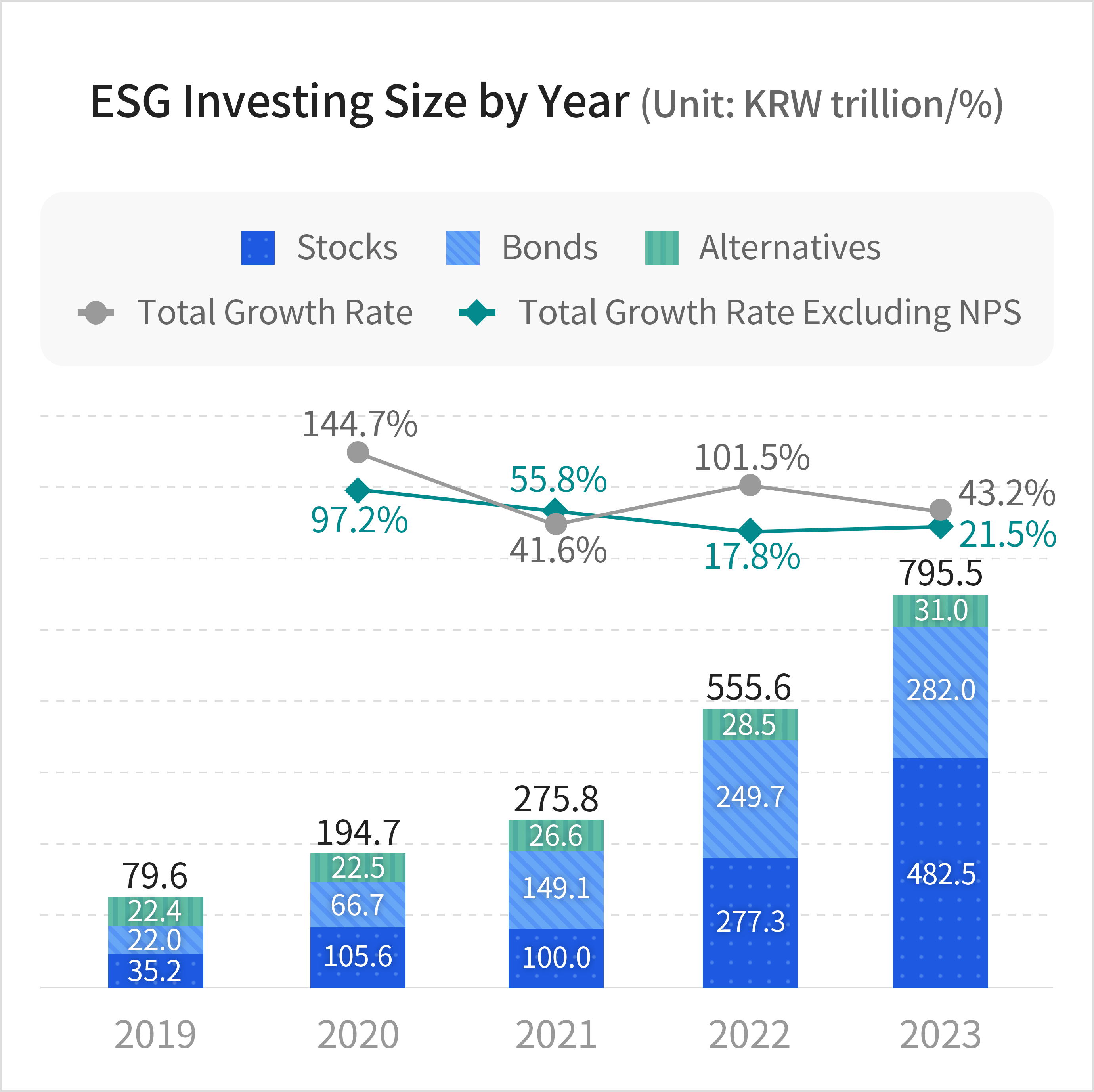
As of 2023, ESG investments by domestic financial institutions totaled KRW 795.5 trillion, marking a 43.2% increase from the previous year. This strong growth was primarily driven by the National Pension Service (NPS), which accounts for 73.8% of all ESG investments.
Excluding the NPS(National Pension Service), ESG investments reached KRW 208.4 trillion, up 21.5% year on year. This increase is largely attributed to the government’s initiative to promote the ESG bond market by providing interest rate incentives for green bonds, which has stimulated ESG bond investments across the financial sector.
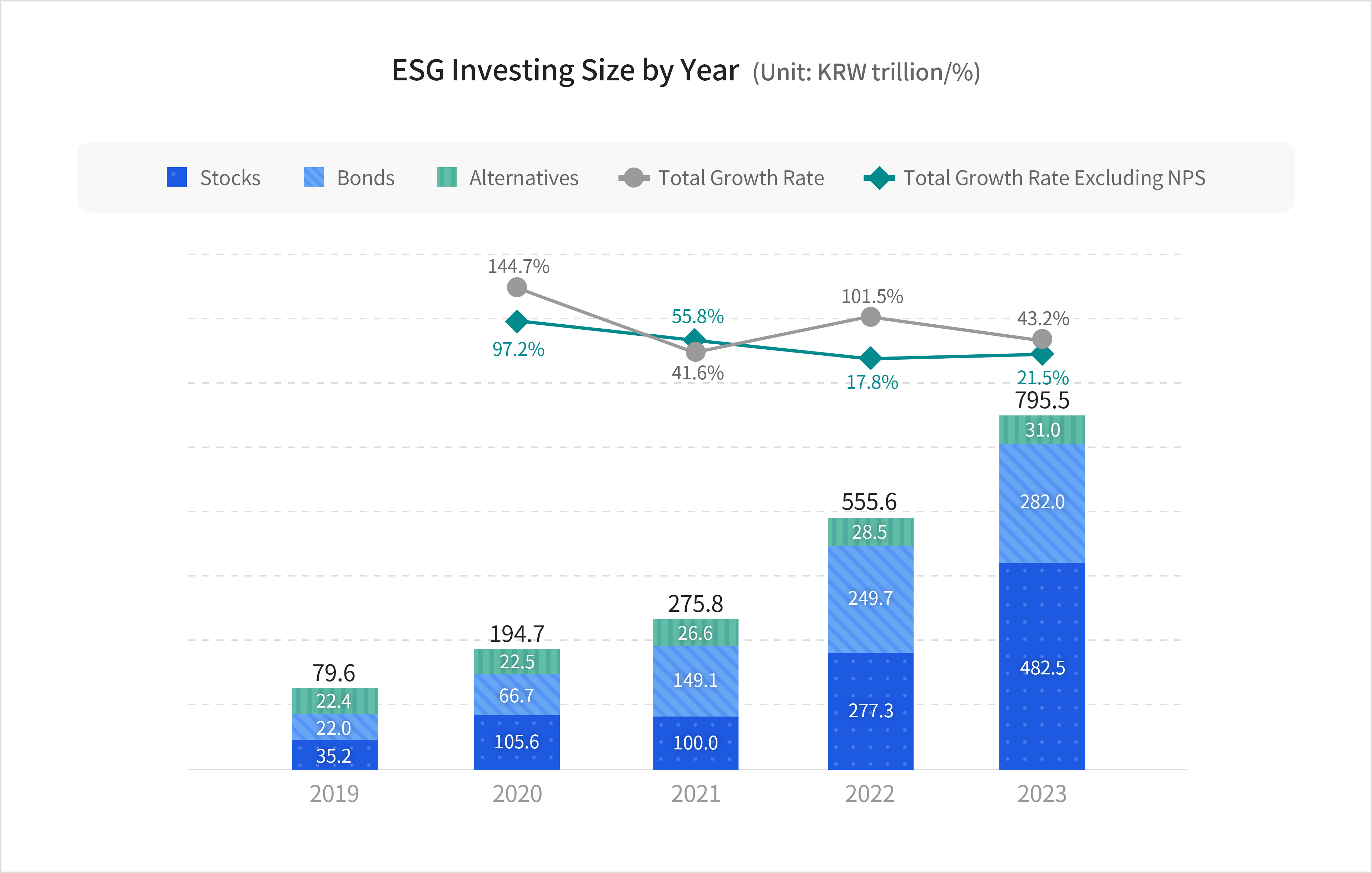
ESG Investing Size by Year(Unit:KRW trillion/%)
							2019  : 79.6, 2020 : 194.7 2021 : 275.8, 2022 : 555.6, 2023 : 795.5
							2019 : Stocks 35.2, Bonds 22.0, Alternatives : 22.4
							2020 : Stocks 105.6, Bonds 66.7, Alternatives 22.5 Total Growth Rate Excluding NPS 97.2% Total Growth Rate 144.7%
							2021 : Stocks 100.0 Bonds 149.1 Alternatives 26.6 Total Growth Rate Excluding NPS 55.8% Total Growth Rate 41.6%
							2022 : Stocks 277.3 Bonds 249.7 Alternatives 28.5 Total Growth Rate Excluding NPS 17.8% Total Growth Rate 101.5%
							2023 : Stocks 482.5 Bonds 282.0 Alternatives 31.0 Total Growth Rate Excluding NPS 21.5% Total Growth Rate 43.2% ESG Investing Size by Year(Unit:KRW trillion/%)
							2019  : 79.6, 2020 : 194.7 2021 : 275.8, 2022 : 555.6, 2023 : 795.5
							2019 : Stocks 35.2, Bonds 22.0, Alternatives : 22.4
							2020 : Stocks 105.6, Bonds 66.7, Alternatives 22.5 Total Growth Rate Excluding NPS 97.2% Total Growth Rate 144.7%
							2021 : Stocks 100.0 Bonds 149.1 Alternatives 26.6 Total Growth Rate Excluding NPS 55.8% Total Growth Rate 41.6%
							2022 : Stocks 277.3 Bonds 249.7 Alternatives 28.5 Total Growth Rate Excluding NPS 17.8% Total Growth Rate 101.5%
							2023 : Stocks 482.5 Bonds 282.0 Alternatives 31.0 Total Growth Rate Excluding NPS 21.5% Total Growth Rate 43.2% ESG Investing Size by Year(Unit:KRW trillion/%)
							2019  : 79.6, 2020 : 194.7 2021 : 275.8, 2022 : 555.6, 2023 : 795.5
							2019 : Stocks 35.2, Bonds 22.0, Alternatives : 22.4
							2020 : Stocks 105.6, Bonds 66.7, Alternatives 22.5 Total Growth Rate Excluding NPS 97.2% Total Growth Rate 144.7%
							2021 : Stocks 100.0 Bonds 149.1 Alternatives 26.6 Total Growth Rate Excluding NPS 55.8% Total Growth Rate 41.6%
							2022 : Stocks 277.3 Bonds 249.7 Alternatives 28.5 Total Growth Rate Excluding NPS 17.8% Total Growth Rate 101.5%
							2023 : Stocks 482.5 Bonds 282.0 Alternatives 31.0 Total Growth Rate Excluding NPS 21.5% Total Growth Rate 43.2%
Source: KoSIF(Korea Sustainability Investing Forum), Representative Byeong-deok Min's office
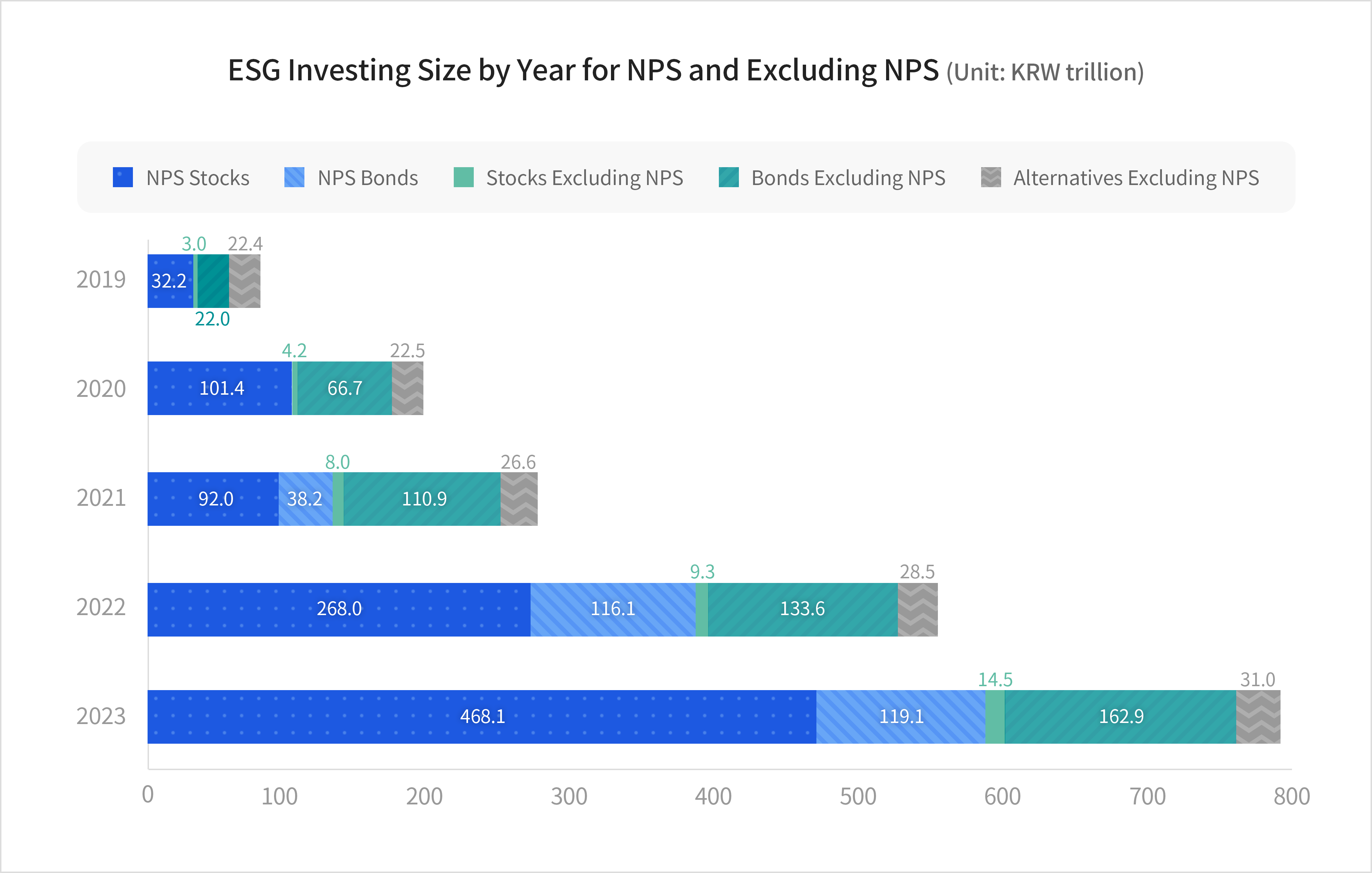
ESG Investing Size by Year for NPS and Excluding NPS(Unit:KRW trillion)
							2019 : NPS Stocks 32.2, Stocks Excluding NPS  3.0, Bonds Excluding NPS 22.0, Alternatives Excluding NPS 22.4
							2020 : NPS Stocks 101.4, Stocks Excluding NPS 4.2, Bonds Excluding NPS 66.7, Alternatives Excluding NPS 22.5
							2021 : NPS Stocks 92.0, NPS Bonds 38.2, Stocks Excluding NPS 110.9, Alternatives Excluding NPS 26.6
							2022 : NPS Stocks 268.0, NPS Bonds 116.1, Stocks Excluding NPS 9.3, Bonds Excluding NPS 133.6, Alternatives Excluding NPS 28.5
							2023 : NPS Stocks 468.1, NPS Bonds 119.1, Stocks Excluding NPS 14.5, Bonds Excluding NPS 162.9, Alternatives Excluding NPS 31.0 ESG Investing Size by Year for NPS and Excluding NPS(Unit:KRW trillion)
							2019 : NPS Stocks 32.2, Stocks Excluding NPS  3.0, Bonds Excluding NPS 22.0, Alternatives Excluding NPS 22.4
							2020 : NPS Stocks 101.4, Stocks Excluding NPS 4.2, Bonds Excluding NPS 66.7, Alternatives Excluding NPS 22.5
							2021 : NPS Stocks 92.0, NPS Bonds 38.2, Stocks Excluding NPS 110.9, Alternatives Excluding NPS 26.6
							2022 : NPS Stocks 268.0, NPS Bonds 116.1, Stocks Excluding NPS 9.3, Bonds Excluding NPS 133.6, Alternatives Excluding NPS 28.5
							2023 : NPS Stocks 468.1, NPS Bonds 119.1, Stocks Excluding NPS 14.5, Bonds Excluding NPS 162.9, Alternatives Excluding NPS 31.0 ESG Investing Size by Year for NPS and Excluding NPS(Unit:KRW trillion)
							2019 : NPS Stocks 32.2, Stocks Excluding NPS  3.0, Bonds Excluding NPS 22.0, Alternatives Excluding NPS 22.4
							2020 : NPS Stocks 101.4, Stocks Excluding NPS 4.2, Bonds Excluding NPS 66.7, Alternatives Excluding NPS 22.5
							2021 : NPS Stocks 92.0, NPS Bonds 38.2, Stocks Excluding NPS 110.9, Alternatives Excluding NPS 26.6
							2022 : NPS Stocks 268.0, NPS Bonds 116.1, Stocks Excluding NPS 9.3, Bonds Excluding NPS 133.6, Alternatives Excluding NPS 28.5
							2023 : NPS Stocks 468.1, NPS Bonds 119.1, Stocks Excluding NPS 14.5, Bonds Excluding NPS 162.9, Alternatives Excluding NPS 31.0
Source: KoSIF(Korea Sustainability Investing Forum), Representative Byeong-deok Min's office
NPS’s ESG Investing
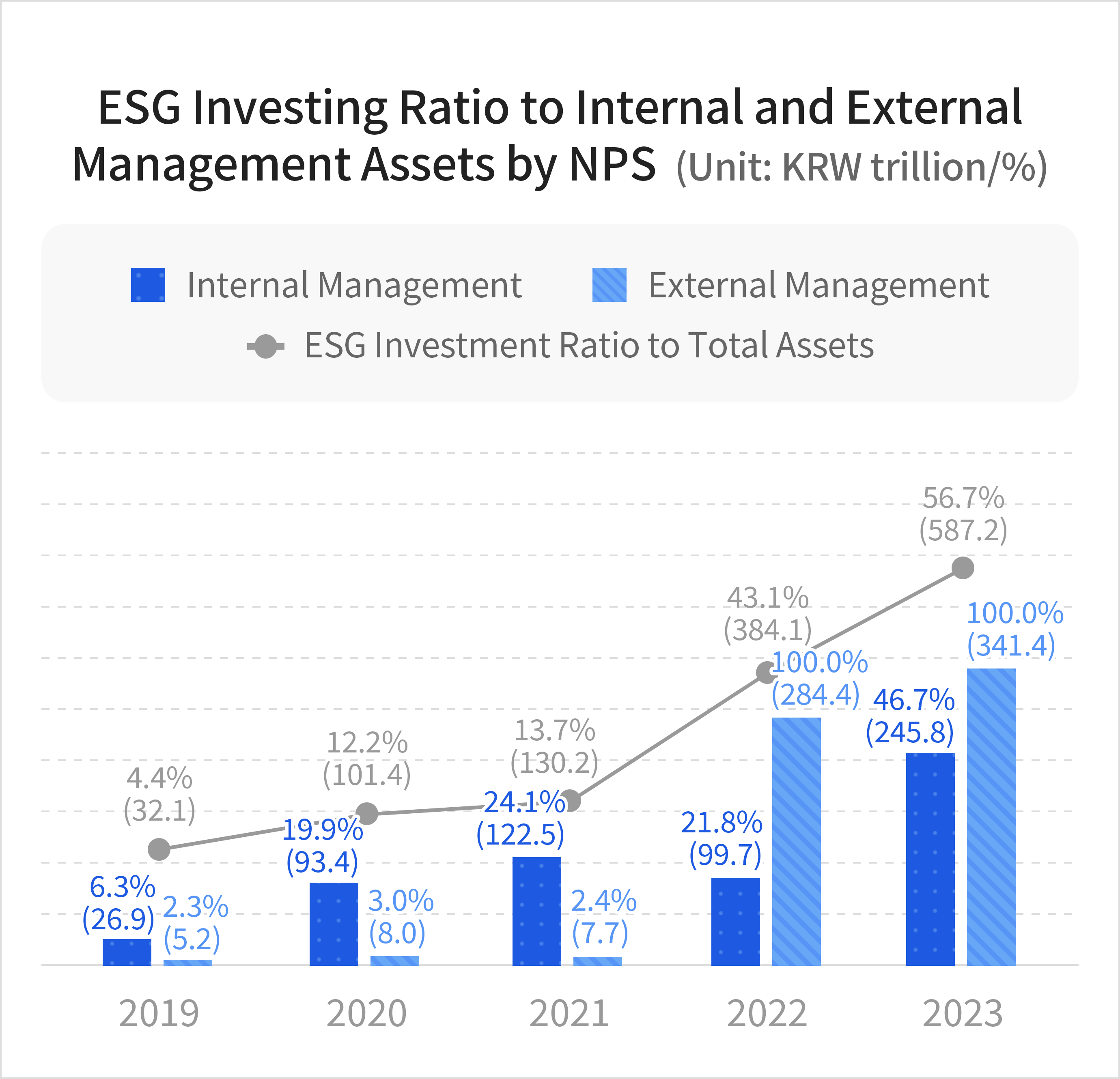
The National Pension Service (NPS) recorded KRW 587.2 trillion in ESG investments in 2023, representing a 52.9% year-on-year increase.
This expansion reflects the implementation of the ESG Integration Policy, introduced under the Plan to Facilitate Responsible Investment approved by the NPS in 2019. Consequently, the share of responsible investment in the NPS’s total assets under management has continued to rise—13.7% in 2021, 43.1% in 2022, and 56.7% in 2023.
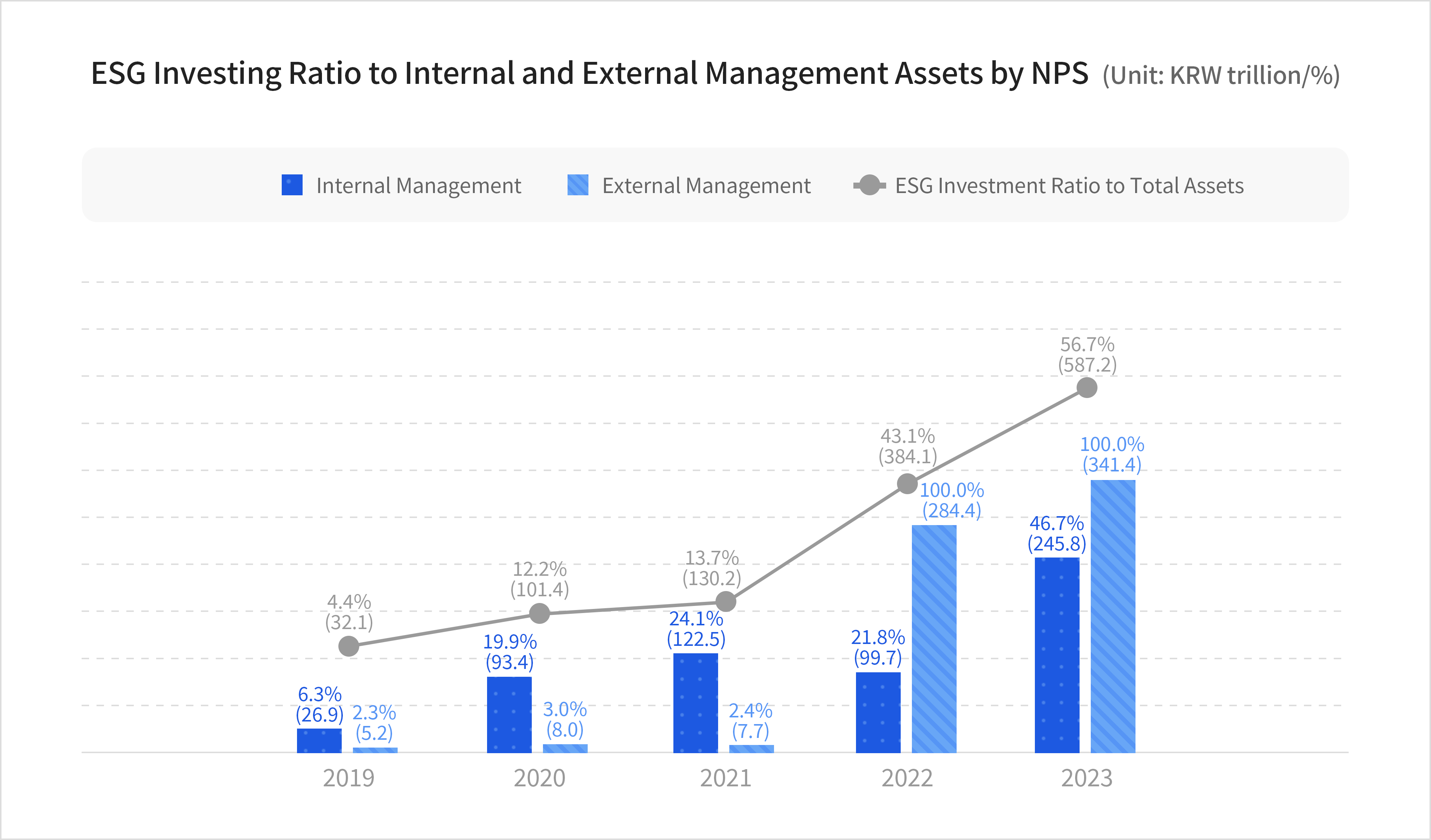
ESG Investing Ratio to Internal and External Management Assets by NPS (Unit: KRW trillion/%)
							2019 : Internal Management 6.3%(26.9), External Management 2.3%(5.2), ESG Investment Ratio to Total Assets 4.4%(32.1)
							2020 : Internal Management 19.9%(93.4), External Management 3.0%(8.0), ESG Investment Ratio to Total Assets 12.2%(101.4)
							2021 : Internal Management 24.1%(122.5), External Management 2.4%(7.7), ESG Investment Ratio to Total Assets 13.7%(130.2)
							2022 : Internal Management 21.8%(99.7), External Management 100.0%(284.4), ESG Investment Ratio to Total Assets 43.1%(384.1)
							2023 : Internal Management 46.7%(245.8), External Management 100.0%(341.4), ESG Investment Ratio to Total Assets 56.7%(587.2) ESG Investing Ratio to Internal and External Management Assets by NPS (Unit: KRW trillion/%)
							2019 : Internal Management 6.3%(26.9), External Management 2.3%(5.2), ESG Investment Ratio to Total Assets 4.4%(32.1)
							2020 : Internal Management 19.9%(93.4), External Management 3.0%(8.0), ESG Investment Ratio to Total Assets 12.2%(101.4)
							2021 : Internal Management 24.1%(122.5), External Management 2.4%(7.7), ESG Investment Ratio to Total Assets 13.7%(130.2)
							2022 : Internal Management 21.8%(99.7), External Management 100.0%(284.4), ESG Investment Ratio to Total Assets 43.1%(384.1)
							2023 : Internal Management 46.7%(245.8), External Management 100.0%(341.4), ESG Investment Ratio to Total Assets 56.7%(587.2) ESG Investing Ratio to Internal and External Management Assets by NPS (Unit: KRW trillion/%)
							2019 : Internal Management 6.3%(26.9), External Management 2.3%(5.2), ESG Investment Ratio to Total Assets 4.4%(32.1)
							2020 : Internal Management 19.9%(93.4), External Management 3.0%(8.0), ESG Investment Ratio to Total Assets 12.2%(101.4)
							2021 : Internal Management 24.1%(122.5), External Management 2.4%(7.7), ESG Investment Ratio to Total Assets 13.7%(130.2)
							2022 : Internal Management 21.8%(99.7), External Management 100.0%(284.4), ESG Investment Ratio to Total Assets 43.1%(384.1)
							2023 : Internal Management 46.7%(245.8), External Management 100.0%(341.4), ESG Investment Ratio to Total Assets 56.7%(587.2)
Source: KoSIF(Korea Sustainability Investing Forum), Representative Byeong-deok Min's office